Table of Contents
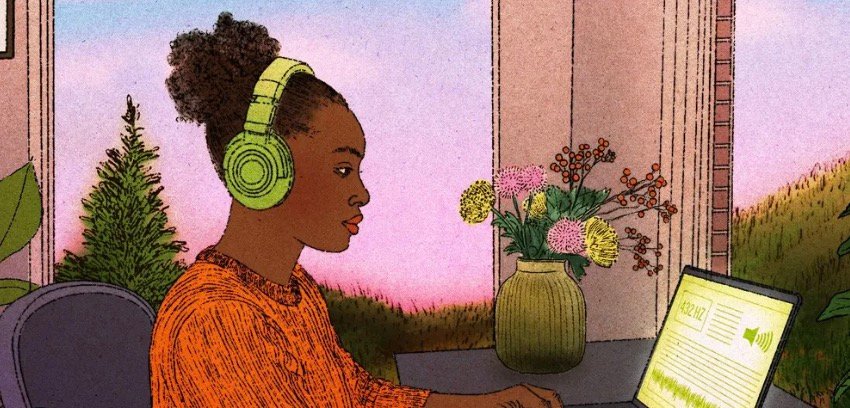
You’ve probably noticed it by now. The quiet hum in the open-plan office shifts when your co-worker slips on their headphones. No more generic pop playlists. Instead, they’re locked into tracks that feel just a touch warmer, a little more grounded. That’s the 432 Hz music trend — and it’s spreading like wildfire through workplaces in 2026.
People aren’t just listening for fun. They’re reaching for these altered frequencies to cut through afternoon slumps, quiet racing thoughts, and stay locked in during back-to-back Zoom calls. What started as a niche wellness curiosity has become the soundtrack of focused professionals everywhere.
The 432 Hz Music Trend Isn’t New — But It Just Hit Critical Mass
Music tuned to 432 Hz sits slightly lower than the industry standard of 440 Hz. That tiny shift — roughly 1.8 percent flatter — creates a warmer, rounder tone that many describe as instantly calming. For decades, artists and sound healers experimented with it. Now, in 2026, it’s everywhere: Spotify playlists exploding with saves, YouTube meditation mixes racking up millions of views, and even major streaming algorithms pushing “432 Hz versions” of popular tracks right into your feed.
The spark? Real people sharing real results. Office workers dealing with chronic pain, ADHD, migraines, or just everyday stress started posting about it. One pharmacy marketing coordinator in North Carolina told reporters she uses it during breaks to feel more centered. A video creator battling noise sensitivity swears it keeps her in the writing zone for hours. The stories spread fast — and suddenly everyone’s co-worker seemed tuned in.
Why 432 Hz Feels Different From Standard 440 Hz Tracks
Drop the conspiracy theories for a second. The difference is subtle but noticeable. Standard 440 Hz music can sound brighter, sharper, almost edgy under stress. Flip to 432 Hz and the same song breathes easier. Notes feel more connected. The vibration lands softer in the chest.
One small but telling 2019 study played movie soundtracks to participants — once at 440 Hz, once at 432 Hz. Heart rates dropped more noticeably with the lower tuning (about 4.79 beats per minute on average), breathing slowed slightly, and people reported feeling more focused and satisfied afterward. It wasn’t a miracle cure, but the numbers were enough to make researchers take notice.
Of course, experts push back hard on wilder claims. Susan Rogers, Berklee College of Music professor and former Prince sound engineer, cuts straight through the hype: there are billions of frequencies hitting us every second. Singling out one as “the frequency of the universe” doesn’t hold up scientifically. Still, she acknowledges what countless listeners already feel — music moves us, and some tunings just hit different.
Celebrities and Musicians Are All In
Ziggy Marley didn’t just dip a toe in. He recorded tracks from his recent album in full 432 Hz and made it clear he’s never going back. The reggae legend’s choice gave the trend instant mainstream cred. Other artists have quietly experimented too, re-releasing classics or creating original material that feels more organic and less clinical.
The result? Fans don’t just stream the music — they share it like a secret weapon. “This track but in 432 Hz” comments flood comment sections. Producers offer quick conversion tools. The 432 Hz music trend turned into a full cultural moment.
What’s Really Happening in the Cubicles
Slip on the headphones during a hectic Tuesday and the office noise fades. The golden glow of your monitor feels less harsh. Tension that usually builds in your shoulders starts to ease. That’s the common thread in every story: people feel more present.
One telehealth worker with chronic scoliosis plays 432 Hz house music while assisting patients. “It helps me focus and relax at the same time,” she said. Another professional battling ADHD uses it to slow racing thoughts and create intentional space in her day. A writer fighting migraines keeps it on low in the background — the lower frequency soothes without distracting.
It’s not magic. It’s music doing what music has always done best — shifting your internal state. The slightly lower pitch simply resonates in a way that feels kinder to tired brains and bodies.
The Psychology and Timing Behind the 2026 Surge
Post-pandemic workplaces run on quiet desperation for better focus tools. Burnout is real. Attention spans are fragmented. People want solutions that don’t require another app or expensive therapist. 432 Hz music fits perfectly: free or cheap, instantly accessible, and backed by enough personal testimonials to feel worth trying.
Plus, the sound itself invites mindfulness. You don’t just hear it — you feel it settle in your body. That subtle warmth makes the workday feel a little less like a grind and a little more like something you can actually flow through.
Music historians point out tuning standards have always shifted with culture. The 440 Hz we grew up with only became the global norm in the mid-20th century. Before that, pitches varied by region, voice, and instrument. Today’s 432 Hz movement taps into that same desire for something that feels more human, more natural.
Should You Try It?
Next time your co-worker offers you an earbud, take it. Queue up a 432 Hz playlist during your next deep-work block and see what happens. You might notice the same thing thousands already have: the music doesn’t just play in the background. It changes the temperature of the room inside your head.
Whether the science catches up fully or not, the trend is here. Offices are quieter. Focus is sharper. And a whole generation of workers just found a new favorite frequency.