Table of Contents
The announcement landed like a thunderclap across Hollywood. On May 27, 2026, Tribeca Festival confirmed that “Dreams of Violets” would receive its world premiere on June 10 at the AMC Flatiron Theatre in New York. This isn’t just another festival slot. It marks the first time a major film festival has programmed a complete feature-length, live-action movie made entirely with artificial intelligence.
No actors. No cameras. No sets. No crew on location. Just one director working from his London apartment and a suite of AI tools that turned raw reporting into a 75-minute docudrama. The theater erupted with conversation the second the news broke — not because the technology is flashy, but because the story behind it feels urgent and deeply human.
Why “Dreams of Violets” Exists
Ash Koosha, the Tehran-born director who left Iran in 2009 and now runs AI studio Fountain 0, never planned to pioneer a new filmmaking era. He simply wanted to bear witness. When reports of the January 2026 protests and the violent crackdown reached him in London, he felt the same pull so many exiled storytellers have felt: the need to remember the dead and give voice to families still living under silence.
“I would have preferred to make this film with a crew, with actors, with the dignity of a full production,” Koosha said. “That was not available to me. I am one person, in exile, with no access to Iran, no access to the locations, no access to the people. The AI pipeline made it possible to do what would otherwise have been impossible: to create a memorial film for an event that happened behind a wall I cannot cross.”
His brother Pooya Koosha, based in Menlo Park, joined as producer. Together they built the film in three months for roughly $2,000 using Kling AI for video generation, Claude for script refinement, Gemini and Nanobanana for research and imagery, and Fountain 0’s own tools for precise blocking and frame accuracy. Every face, every alley, every dawn raid you see on screen was generated pixel by pixel.
The Story the AI Was Built to Tell
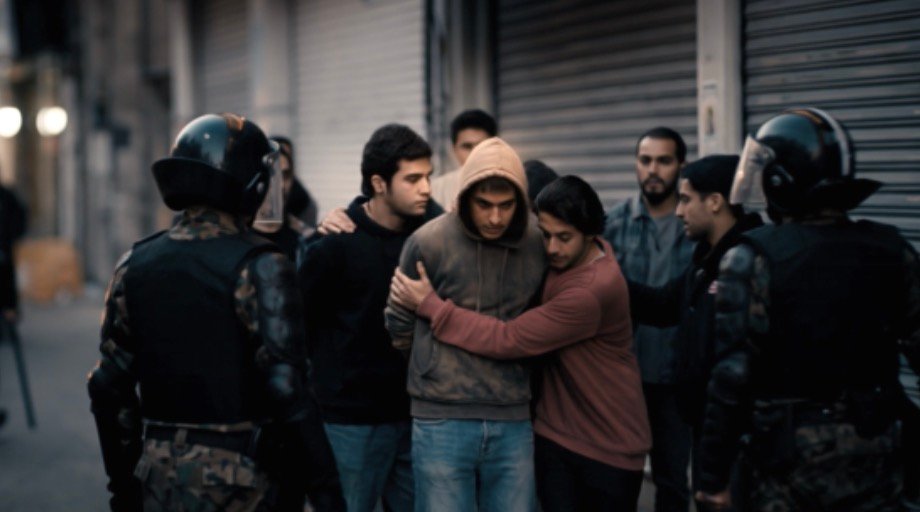
“Dreams of Violets” unfolds in Tehran at dawn during the January 2026 protests. Five strangers hide in a dead-end alley as regime forces execute the wounded nearby. Above them, 10-year-old Amir — a boy with cerebral palsy — watches from a window and makes a choice that will echo through the rest of his life. The film draws from 47 years of Iranian civilian resistance and real reporting that documented at least 7,000 deaths and more than 50,000 arrests.
It is a docudrama, not a documentary. Yet the emotional weight lands with startling immediacy because the technology now allows a single determined filmmaker to visualize what traditional production could never reach.
Key Facts at a Glance
| Detail | Information |
|---|---|
| Runtime | 75 minutes |
| Budget | Approximately $2,000 |
| Production Time | Three months |
| World Premiere | June 10, 2026 |
| Venue | AMC Flatiron Theatre, New York City |
| Festival | Tribeca Film Festival 2026 |
| Directors | Ash Koosha & Pooya Koosha |
| Production Company | Fountain 0 |
What Tribeca Saw — and Why It Matters
Jane Rosenthal, Tribeca co-founder, didn’t greenlight the film for its novelty alone. She saw something rarer: “a powerful example of how emerging technologies like AI can be used not simply as tools of innovation, but as vehicles for deeply human storytelling.”
At a moment when both artificial intelligence and Iran sit at the center of global conversation, the festival recognized that this particular story needed to be told now — and that the only way it could be told was through the very technology that makes many in the industry uneasy.
The Human Cost Behind the Algorithm
Koosha has been clear about the ethical questions the project raises. “I understand that an AI-generated film about people who actually died raises difficult questions,” he said. “My answer is that the alternative — silence, forgetting, the regime’s preferred outcome — is worse. The film exists because the dead deserve to be witnessed and because the families inside Iran, who cannot speak, deserve someone outside who refuses to forget.”
That single sentence captures why this moment feels different from previous AI experiments. It isn’t about replacing artists. It’s about removing the financial and physical barriers that have kept too many urgent stories from ever reaching the screen.
What Comes Next
“Dreams of Violets” premieres in just ten days. Tickets are already moving fast. Whether audiences leave the theater exhilarated, unsettled, or both, one thing is certain: the conversation about what counts as “real” cinema has permanently shifted.
For independent filmmakers who have spent years watching budgets balloon and doors close, the film offers a glimpse of something long denied — the chance to tell the stories that matter most without waiting for permission or money that may never arrive.
The future of film didn’t arrive with fanfare and red carpets. It arrived quietly, from a London apartment, built by two brothers who refused to let silence win.