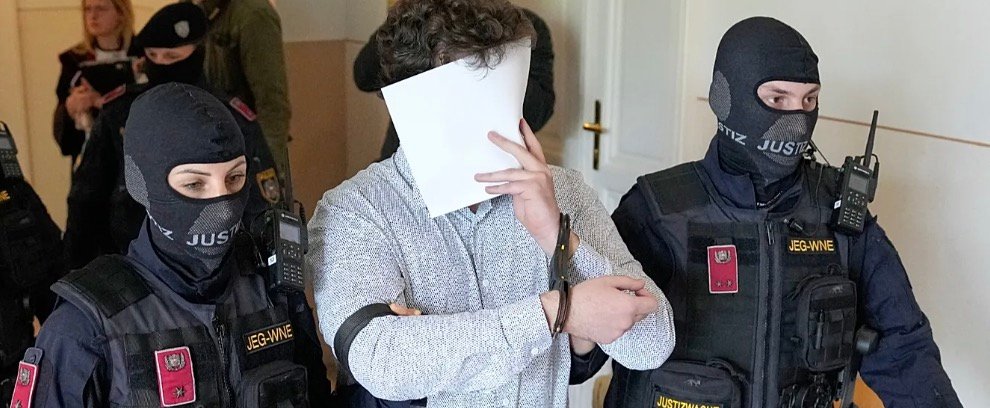
Nearly two years after a jihadist plot nearly turned Taylor Swift’s record-breaking Eras Tour stop in Vienna into unimaginable tragedy, an Austrian court delivered justice. On May 28, 2026, a 21-year-old man was sentenced to 15 years in prison for planning a terror attack on the three sold-out shows at Ernst Happel Stadium.
The ruling closes one of the darkest chapters in Swift’s historic tour — and gives Swifties worldwide the closure they have waited for since August 2024.
The Foiled Plot That Shook Vienna
The threat was real and chilling. Beran A., an Austrian citizen, had sworn allegiance to Islamic State and followed online instructions to build a homemade bomb using TATP explosive. Court records show he tried to buy a machine gun and hand grenade while plotting to strike crowds outside the stadium during Swift’s August 8–10, 2024 performances.
A CIA tip reached Austrian authorities just in time. Police arrested him on August 7, 2024 — the day before the first show — and seized bomb-making materials, knives, machetes, and ISIS propaganda from his apartment. The three concerts, which had sold nearly 200,000 tickets, were immediately cancelled.
Swifties who had flown in from around the world gathered in central Vienna instead, trading friendship bracelets and singing her songs in the streets. What should have been the loudest nights of the Eras Tour became nights of quiet heartbreak.
Court Delivers Justice Nearly Two Years Later
The state court in Wiener Neustadt convicted Beran A. on multiple terrorism charges, including planning the concert attack and other related offenses. He admitted his role during the trial and told the court, “I am sorry.”
A co-defendant, Arda K., received 12 years for his part in a broader jihadist cell. The 15-year sentence for Beran A. stands as one of the strongest responses yet to the rising threat of Islamic extremism targeting major Western entertainment events.
Taylor Swift’s Powerful Words on the Ordeal
Two weeks after the cancellations, Swift broke her silence in an Instagram statement that still resonates today:
“Having our Vienna shows cancelled was devastating. The reason for the cancellations filled me with a new sense of fear, and a tremendous amount of guilt because so many people had planned on coming to those shows. But I was also so grateful to the authorities because thanks to them, we were grieving concerts and not lives.”
She waited until the European leg ended to speak, putting fan safety first. That mix of vulnerability and strength defined her response — and continues to define how she moves through the world as the biggest star on the planet.
How Fans Weathered the Storm
The cancellation hit hard. Thousands of Swifties had built entire trips around those Vienna nights. Many watched the news break in real time and immediately started organizing support networks. Videos from those days show fans hugging in the rain, singing “Long Live” and “Shake It Off” through tears.
Nearly two years later, the sentencing brings a different energy. Relief. Validation. A sense that the system worked when it mattered most. One fan who had traveled from the U.S. for the shows told reporters back in 2024 that she felt “robbed of the best night of my life.” Today, many of those same fans are posting the same message: justice finally feels real.
Why This Matters for Live Music and Artist Safety
Taylor Swift’s Eras Tour became the highest-grossing tour in history not just because of the music, but because of the communal experience it created. That same massive scale made her a target. The Vienna plot exposed how global pop culture events have become high-value symbols for extremists.
The swift international cooperation between the CIA and Austrian authorities prevented what could have been catastrophic. It also sent a clear message: attacks on artists and their fans will be met with the full force of the law.
For the live music industry, the case is a reminder that security can never be taken for granted — especially when one performer draws the kind of crowds Swift does. Yet the story also proves something powerful: the bond between artist and audience is stronger than fear.
The Eras Tour continued. Swift kept showing up. Fans kept showing up. And now, almost two years later, the man who tried to destroy that magic is exactly where he belongs — behind bars for a very long time.