Table of Contents
The Ed Sullivan Theater pulsed with electricity on May 21, 2026. Stephen Colbert walked onto the stage for the very last time as host of The Late Show. The crowd roared like it had for the past 11 years. Phones lit up the room. This was no ordinary finale. It marked the end of a 33-year franchise that began with David Letterman and reached new heights under Colbert’s blend of sharp satire and genuine connection.
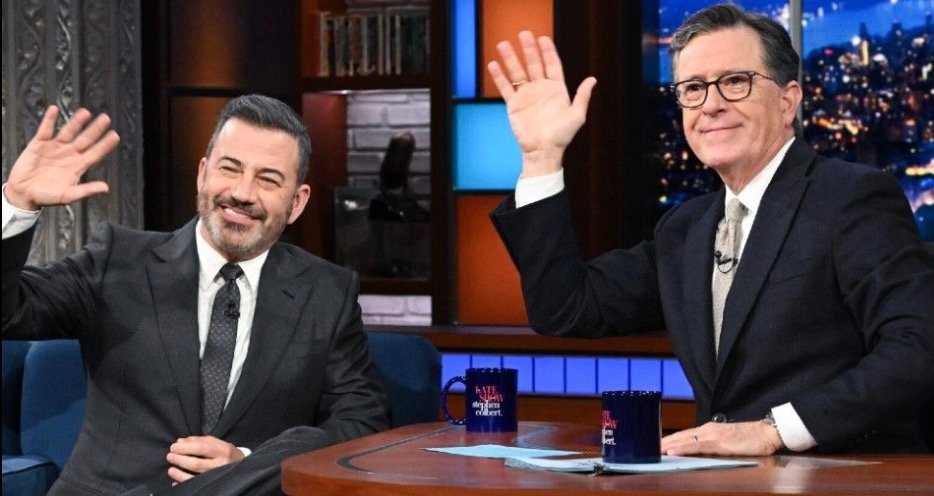
Yet the story that spread fastest across social media and news feeds centered on one unexpected act of respect. Jimmy Kimmel made a bold choice that night. He pulled his own show from the air. No new monologue. No fresh jokes. Just a rerun. All so viewers could focus on Colbert’s send-off without competition. That single decision turned a bittersweet goodbye into something bigger — a rare moment of unity in late-night television.
The Night the Desk Went Dark
Colbert opened his final episode with trademark ease. “If you’re just tuning into ‘The Late Show,’ you missed a lot,” he quipped. The audience laughed, then grew quiet as reality sank in. When fans booed the mention of it being the end, Colbert stopped them gently. “No, no, we were lucky enough to be here for the last 11 years,” he said. “You can’t take this for granted.”
He delivered a standard monologue focused on the national conversation — no forced celebrity plugs, no grandstanding. Then the surprises began. Bryan Cranston, Paul Rudd, and Tim Meadows burst in, playfully fighting over who would claim the title of “last guest.” Paul McCartney ultimately took the chair for a warm, reflective interview. The Beatle joked about resisting change, especially iPhone updates: “I bought you. I don’t want you to change.” The moment felt full-circle — McCartney performing on the same stage where The Beatles made history in 1964.
A surreal “interdimensional wormhole” skit consumed late-night TV in the episode’s wildest segment. Video cameos from John Oliver, Jon Stewart, and even Kimmel himself added meta layers of humor about the industry’s pressures. The musical close hit hardest. Colbert joined Elvis Costello and Jon Batiste for a raw performance of Costello’s “Jump Up.” Then McCartney, Costello, and the band closed with The Beatles’ “Hello, Goodbye.” The theater erupted. Many in the crowd wiped away tears as the final notes faded.
Jimmy Kimmel’s Quiet but Powerful Tribute
The night before, on May 20, Kimmel addressed his own audience with unusual seriousness. He announced that Jimmy Kimmel Live! would air a rerun on May 21 “out of respect for our colleague and friend, Stephen Colbert, and the writers, producers, staff and crew at ‘The Late Show.’”
“Everyone at that show has always been very gracious to us. We never felt like we were competing against them. It was nothing like the old days of late night.”
— Jimmy Kimmel
Kimmel did not stop there. He voiced clear frustration with the cancellation itself. “I think you know how I feel about the fact that they’re being pushed out,” he said. “I hope the people who did the pushing feel ashamed of themselves tonight, although I know they probably won’t.” Then came the direct call to action: “I will be watching tomorrow night. I hope that those of you who watch also will tune in to CBS for the last time. Don’t ever watch it again.”
The gesture landed. In an era when late-night hosts often trade barbs for ratings, Kimmel chose solidarity. He cleared the 11:35 p.m. slot so Colbert could have the biggest possible audience for his final bow. Industry insiders called it classy. Fans called it moving. Social media lit up with clips of Kimmel’s monologue paired with Colbert’s closing moments.
Why This Ending Matters
CBS announced the cancellation in July 2025 as a “purely financial decision.” The network cited declining ad revenue across linear television and the high costs of producing a daily late-night show. Colbert’s program consistently drew 2.15 to 2.7 million viewers — respectable numbers in a fragmented landscape, yet not enough to offset losses estimated in the tens of millions annually. The slot will now go to Byron Allen’s “Comics Unleashed,” a lower-cost, apolitical stand-up format.
Colbert himself addressed the toll the job took. In earlier comments he noted that hosting required “a lot of bone marrow” — every ounce of energy he had. He leaves with time and health intact for whatever comes next, whether acting, writing, or new projects. His evolution from the ironic Colbert Report persona to a more empathetic, audience-connected host mirrored broader shifts in how Americans consume news and comedy.
| Key Fact | Details |
|---|---|
| Final Air Date | May 21, 2026 |
| Seasons Hosted by Colbert | 11 (Episode 1,801 overall) |
| Franchise Run | 33 years (1993–2026) |
| Special Guests | Paul McCartney (final interview), Elvis Costello, Jon Batiste, Bryan Cranston, Paul Rudd, Tim Meadows |
| Kimmel’s Action | No new episode; rerun aired in solidarity |
| Colbert’s Closing Message | “We were lucky enough to be here for the last 11 years” |
The Human Side Fans Felt Deepest
Backstage after the cameras stopped, a star-studded wrap party unfolded. Laughter mixed with tears. Staff who had worked beside Colbert for more than a decade hugged colleagues they might not see every night anymore. The Ed Sullivan Theater set itself will live on — CBS donated it to the Museum of Broadcast Communications in Chicago. The stage? Still undecided.
Outside the theater, fans lingered for hours. Many described the same feeling: gratitude mixed with loss. One longtime viewer put it simply: “He made us feel less alone during some of the craziest years in recent history.” That connection — the sense that Colbert was processing the news alongside his audience rather than at them — defined his CBS run and made the farewell hit harder.
What Comes Next
Colbert has not announced specific plans, but the door remains wide open. Late-night itself continues to evolve, with streaming platforms and podcasts reshaping how comedians reach audiences. Kimmel’s tribute reminded everyone that even in a cutthroat business, respect still matters. The two hosts proved that competition and camaraderie can coexist.
The final image from May 21 lingers: Colbert smiling under the lights, McCartney’s voice filling the historic theater, and across town, Kimmel’s desk dark in a silent act of friendship. Late-night television lost a giant. It also gained a shining example of how to say goodbye with grace.
The curtain has fallen on The Late Show with Stephen Colbert. The laughter, the music, and the gratitude will echo for years.