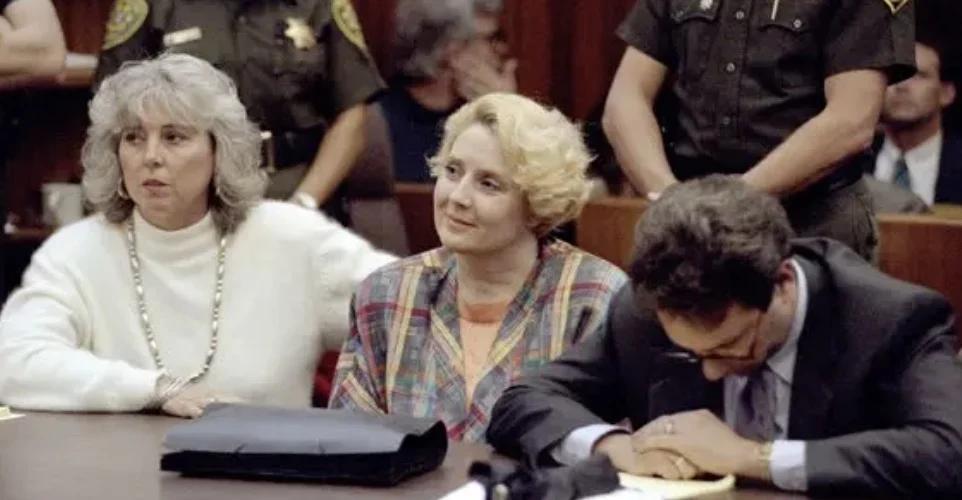
Betty Broderick, the former San Diego socialite convicted of killing her ex-husband and his new wife in 1989, died on May 8, 2026, at age 78 while in state custody. This week the San Bernardino County Coroner officially ruled her death accidental. The ruling came after new details emerged about a serious fall she suffered inside the California Institution for Women.
The fall broke her ribs and triggered septic infections that required transfer to an outside medical facility in Chino. She passed away there in the early morning hours of May 8.
San Bernardino Coroner Rules Betty Broderick Prison Death Accidental
Authorities had initially described the death as natural causes when the California Department of Corrections and Rehabilitation announced it in May. The coroner’s final determination, reported June 3, 2026, changed the official manner of death to accidental and directly tied it to the prison fall and its medical complications.
Her son, Daniel Broderick, confirmed to reporters that his mother had dealt with multiple septic infections in her final weeks. He also described the fall that fractured her ribs and led to her transfer from the Chino prison on April 18, 2026. She received higher-level care at the off-site facility but never recovered.
Timeline of Betty Broderick’s Final Weeks in Custody
- April 18, 2026: Prison officials moved Betty from the California Institution for Women to a specialized medical center in Chino after she fell and sustained broken ribs along with developing severe infections.
- Early May 2026: Her condition worsened. She spent time in intensive care and was briefly placed on life support, according to her son.
- May 8, 2026, 3:40 a.m.: Doctors pronounced her dead at the Chino medical facility. Family members were present.
- June 3, 2026: The San Bernardino County Coroner completed the review and ruled the death accidental.
The California Department of Corrections and Rehabilitation has not released additional internal details beyond confirming the transfer and death date.
Who Was Betty Broderick? The 1989 Double Murder That Captivated the Nation
Elizabeth “Betty” Broderick (née Bisceglia) grew up in New York and moved to California with her husband, prominent attorney Daniel T. Broderick III. Their marriage collapsed amid Daniel’s affair with his legal assistant, Linda Kolkena. The bitter divorce and custody battle played out publicly in San Diego courts.
On November 5, 1989, Betty entered the couple’s home in the Marston Hills neighborhood while they slept. She shot Daniel and Linda multiple times with a revolver she had purchased weeks earlier. She turned herself in shortly afterward.
Prosecutors charged her with two counts of first-degree murder. The first trial ended in a hung jury. A second trial in 1991 convicted her of two counts of second-degree murder. She received a sentence of 32 years to life. Betty maintained the killings were not premeditated and pointed to years of emotional turmoil during the divorce.
Life Behind Bars and Repeated Parole Denials
Betty spent more than 36 years incarcerated, almost entirely at the California Institution for Women in Chino. The parole board denied her release in 2010 and again in 2017, citing lack of remorse in the earlier hearings. Her next eligibility date had been set for 2032, when she would have turned 84.
Prison records and family statements painted a picture of declining health in her later years, though officials released few specifics until after her death.
The Enduring Cultural Legacy of the Betty Broderick Story
Few true-crime cases from the late 1980s and early 1990s stayed in the public conversation as long as this one. The story of a scorned wife who shot her successful ex and his younger new wife became instant tabloid fuel and later serious cultural material.
Television movies starring Meredith Baxter aired in 1992. Books dissected the divorce, the trial, and the psychology involved. The case resurfaced in 2020 when Dirty John Season 2 dramatized the events with Amanda Peet as Betty and Christian Slater as Dan. Podcasts and documentaries continue to examine it.
Public reaction has always split sharply. Some saw Betty as a woman destroyed by gaslighting and financial control during a high-profile divorce. Others viewed the shootings as cold-blooded revenge that left two people dead and children without parents. That tension has never fully faded.
Family Reaction and Lingering Questions
Daniel Broderick told media outlets that while his mother’s actions remained “unforgivable,” he still tried to hold onto memories of better times. Other relatives have stayed largely out of the spotlight in recent years.
Friends of Linda Kolkena have used the renewed attention to remind the public that Linda was only 28 when she was killed and often feels like the forgotten victim in retellings of the case.
What the Accidental Death Ruling Means Now
The coroner’s decision closes the official medical chapter on Betty Broderick’s life. It also adds one final layer to a story that has fascinated and divided Americans for decades. Even in death, the case continues to spark conversations about domestic strife, media sensationalism, the justice system, and how we remember both perpetrators and victims.
For a woman whose name became shorthand for a certain kind of marital rage, the quiet end in a Chino hospital after a fall inside prison feels almost ordinary. The extraordinary story she left behind shows no signs of fading.