Table of Contents
Backrooms and Obsession just delivered one of the clearest box office upsets of 2026. Two horror films directed by young creators who built their names on YouTube walked into theaters and came out on top while a major studio franchise took a hard hit.
Kane Parsons, 20, and Curry Barker, 26, turned their online followings into real ticket sales. Their movies didn’t rely on billion-dollar marketing campaigns or decades-old IP. They relied on concepts that already lived inside millions of screens and the kind of word-of-mouth that turns a slow burn into a stampede.
The Numbers That Tell the Story
Backrooms opened in roughly 3,400 theaters and pulled in $81.5 million domestically in its first weekend. That figure made it A24’s biggest opening ever, crushing the previous record set by Civil War in 2024. Worldwide it already sits above $118 million on a reported $10 million budget.
Obsession, playing in its third weekend, added $26.4 million — up 10 percent from the prior frame — and crossed $100 million domestically. Global totals now sit near $148 million on a budget that came in under $1 million.
Both films finished ahead of or directly challenged Disney’s Star Wars: The Mandalorian and Grogu, which dropped roughly 70 percent in its second weekend. The contrast felt sharp: two original, low-cost horror stories gaining strength while a franchise tentpole lost altitude fast.
| Film | Director | Budget | Recent Weekend | Est. Worldwide |
|---|---|---|---|---|
| Backrooms | Kane Parsons | ~$10 million | $81.5 million (opening) | $118+ million |
| Obsession | Curry Barker | ~$750,000 | $26.4 million (week 3) | $148+ million |
How Two YouTubers Built Audiences Big Enough to Fill Theaters
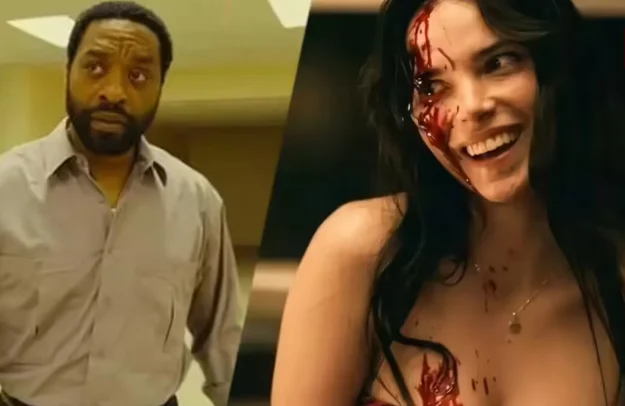
Parsons started posting Backrooms shorts years ago. The yellow rooms, the flickering lights, the sense that you could walk forever and never find an exit — it spread across YouTube and TikTok until the series racked up hundreds of millions of views. When A24 greenlit the feature, Parsons kept the same visual language and brought in actors like Chiwetel Ejiofor and Renate Reinsve without letting the scale swallow the original dread.
Barker came from sketch comedy on YouTube before pivoting to horror shorts. His 2023 short The Chair went viral and opened doors. Obsession carries that same tight, personal feel — a story about a music store clerk who uses a novelty toy to make a coworker obsess over him, then watches everything spiral. The film premiered at TIFF, hit theaters May 15, and has been building momentum through repeat viewings and strong word-of-mouth ever since.
Both directors understood something big studios sometimes miss: the audience that grew up on their free content already trusted them. When the movies arrived, those same fans showed up in person and brought friends.
Why Theaters Felt Different This Weekend
Walk into a packed showing of either film and the crowd skews younger. Many came wearing subtle nods to the directors’ old channels or posting reactions before the credits even rolled. The energy carried the same mix of excitement and nerves you get when an underdog team walks into a hostile arena and refuses to fold.
Backrooms leaned into pure atmosphere. The endless offices and buzzing lights turned the theater dark in a way that made people lean forward. Obsession mixed psychological tension with dark humor and a few nasty surprises that rewarded people who stayed for the whole ride. Neither film needed expensive CGI set pieces. They needed tension that started in the script and stayed there.
That approach produced real legs. Obsession actually gained ground in weekend three while bigger releases faded. Backrooms posted one of the strongest opening weekends for any original horror in recent years and kept selling tickets into the following week.
What This Weekend Really Means
Hollywood has spent years chasing pre-sold IP and massive budgets. This weekend offered a different lesson. Two filmmakers who learned their craft uploading videos to YouTube proved that a sharp concept, a built-in audience, and disciplined execution can still move the needle more than another expensive sequel struggling with audience fatigue.
Studios are already paying attention. Barker reportedly fielded big offers after Obsession’s early numbers. Parsons is fielding sequel talk and other projects. The larger signal is that YouTube continues to function as a genuine development pipeline — not just for short-form content, but for directors who know how to speak directly to the generation that actually buys tickets on opening weekend.
Low-budget horror has always had moments. 2026 is shaping up to be one of the stronger ones in a long time, and it started with two creators who never needed permission to start telling stories.