Table of Contents
The wood-paneled walls of the 60 Minutes offices in Manhattan still hold decades of history. On a Monday in early June 2026, those walls absorbed something they had never quite heard before.
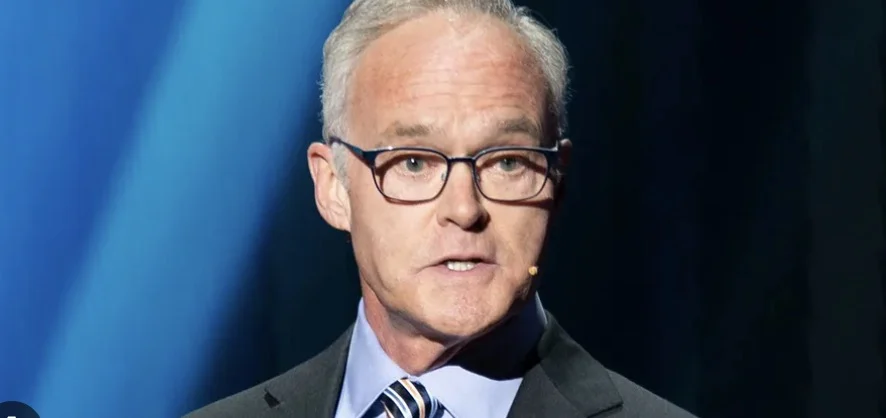
Scott Pelley, the 68-year-old veteran who joined the broadcast in 2004 and became one of its most recognizable faces, stood up during new executive producer Nick Bilton’s first staff meeting and let the room know exactly how he felt.
“She is murdering 60 Minutes,” Pelley said of CBS News editor-in-chief Bari Weiss. “She does not love this place. She was brought in to kill it, and she’s been doing exactly that.”
He turned to Bilton, a former tech journalist with no traditional broadcast news background, and delivered another blow: Bilton had “slender qualifications” for the job and would “never be welcome here.”
The air went still. Staffers who had worked alongside Pelley through war zones and presidential interviews sat frozen. What happened next moved fast.
The Timeline That Rocked the Most Successful Show in Television History
A simple table makes the rapid-fire sequence crystal clear:
| Date (2026) | Key Event |
|---|---|
| Late May / Early June | Bari Weiss oversees firings of executive producer Tanya Simon and correspondents Sharyn Alfonsi and Cecilia Vega as part of 60 Minutes overhaul. Anderson Cooper had already exited. |
| Monday, June 1 | Nick Bilton’s first staff meeting. Scott Pelley publicly confronts him and accuses Weiss of “murdering 60 Minutes.” |
| Tuesday, June 2 (daytime) | Pelley meets with Weiss, Bilton, and CBS News president Tom Cibrowski. No resolution. Pelley presses for answers on the recent firings. |
| Tuesday, June 2 (evening) | Bilton terminates Pelley “for cause” effective immediately in a letter citing the Monday confrontation as “performative display of hostility.” Staff memo announces they have “parted ways.” |
| Tuesday night, June 2 | Pelley releases detailed public statement accusing new management of incompetence, unprofessionalism, and pressuring him to “inject falsehoods and bias” into stories. |
What Pelley Actually Said — And Why It Landed So Hard
Pelley didn’t just vent in that Monday meeting. He brought receipts from his own recent experience.
In his post-firing statement, he wrote that senior managers instructed him to include “assertions that are unverified” in a politically sensitive story. “To date, in every case, I have ignored these instructions or refuse them,” he said.
He went further: “Incompetence and unprofessionalism in the new management have wreaked havoc at the network. The collapse of values at the top has become untenable. The leadership of 60 Minutes is no longer recognizable. The principles I hold dear are gone, and so I must leave as well.”
Then he paid tribute to the show itself. “There has never been anything in America like 60 Minutes,” he wrote. The broadcast had just posted a 9% viewership jump at the end of its 58th season. For a program already considered the most successful in television history, that surge proved the audience still craved exactly what Pelley and his colleagues delivered: integrity, quality, and humanity.
The Management Response
Bilton’s termination letter pulled no punches. He told Pelley the Monday outburst showed “antipathy to the future of the show” and that Pelley had “hijacked” his first meeting with “remarkable incivility and contempt.”
In a separate memo to the broader 60 Minutes team, Bilton acknowledged the pain: “I know how much Scott meant to many of you… I realize this is a great deal of change in a very short time.” He committed to supporting the remaining staff as they head into season 59.
Weiss, who did not attend the Monday meeting, reportedly stayed cool and callous during the Tuesday sit-down, according to Pelley. She offered no detailed answers about why veteran producers and correspondents had been let go.
Why This Hits Different
60 Minutes has survived network upheavals, format experiments, and cultural shifts for nearly six decades. Its Sunday night slot became sacred for millions of Americans who trusted the correspondents to ask the questions others wouldn’t.
Pelley’s résumé includes combat reporting from Afghanistan, Iraq, and Ukraine — places where getting the story wrong carried life-or-death consequences. When a journalist with that background stands up and says the people now running the place are pushing unverified claims and bias, it lands with extra weight.
The human cost ripples outward. Staffers who stayed late Tuesday waiting for word on Pelley’s fate watched one of their own walk out the door. Fans who have watched him for twenty-plus years suddenly lost a familiar, trusted presence right before a new season.
What Comes Next for 60 Minutes
The show enters its 59th season with a dramatically reshaped roster. Lesley Stahl, Bill Whitaker, and Jon Wertheim remain. Questions about new correspondents, editorial direction, and whether the program can maintain its independence under the current ownership structure now dominate every conversation inside and outside the building.
Corporate changes after the 2025 Skydance acquisition of Paramount set this overhaul in motion. The stated goal was modernization and digital growth. The collateral damage has included multiple high-profile exits and, now, the very public firing of one of the program’s most respected voices.
Scott Pelley didn’t just lose a job on June 2, 2026. He forced a very public reckoning about what 60 Minutes is supposed to stand for — and whether that mission can survive the current management shakeup.
The debate is only beginning.